How to clean a washing machine with citric acid, and when not to
How to descale a washer with citric acid, after a manual check: Bosch advises against it, and LG's front-loader page warns off acidic cleaners in Tub Clean.
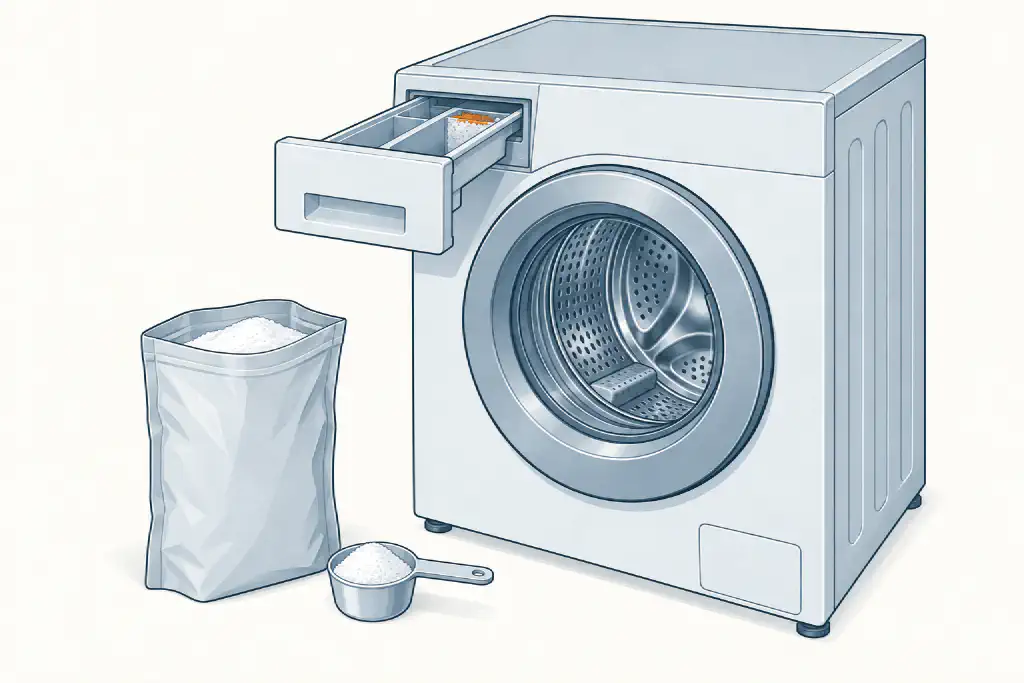
There’s a white crust in the detergent drawer or around the drum, and you’d rather not pour in another bottle of vinegar, whether it’s the smell or a worry about the rubber door gasket. So you’ve got a bag of citric acid powder instead. Whether you should run it through your washer depends on who made the machine.
- Is it safe in my machine?
- Checked your manual? How to run it
- Swapping from vinegar?
- Already descaled and it still smells?
What citric acid does in a washing machine
Limescale is “a hard, chalky deposit, consisting mainly of calcium carbonate”, and it builds up on surfaces where hard water has flowed.
Acids dissolve scale. Descaling acids react with the calcium carbonate in it, leaving a soluble salt and carbon dioxide. Wikipedia’s list of descaling agents includes citric acid, and acetic acid, the acid in vinegar.
A musty smell is a different job. For the musty film, or biofilm, see below.
Is citric acid safe for your washing machine?
It depends on the maker, and Bosch says no. Bosch Ireland puts it plainly: “Citric acid isn’t recommended for cleaning your washing machine. It can damage the rubber parts of the machine and causes faster wear.” It points owners to its own washing machine cleaner instead.
LG’s front-loader page doesn’t mention citric acid. For its Tub Clean cycle, though, it says to avoid “chlorine-based or acidic washing machine cleaners, as they may cause discoloration or corrosion”.
We searched for other makers’ guidance on plain household citric acid in their washers and found none. So check your manual. If it doesn’t say, check the maker’s support pages, or use the descaler or cleaner the maker names. Don’t read silence as a yes.
How to descale a washing machine with citric acid
- Check your manual allows acids. If you haven’t yet, start with the maker check.
- Empty the drum. Take out any laundry.
- Dose and cycle. No washer maker’s page we found gives a dose for plain citric acid. If you use a washing-machine descaler, follow its label.
- HG, a cleaning-products firm rather than a washer maker, says to dissolve “100–150 grams of citric acid in warm water”, pour it into the detergent compartment and run an empty cycle at the highest temperature. HG adds: “always follow the manufacturer’s instructions”.
- Compartment. Use the one your manual names for descaler or cleaner.
- Rinse afterward. Run an empty rinse or short wash with nothing added. Siemens’ routine for its own descaler includes a second run: the 140°F (60°C) program again “without the descaling powder”, to remove any residues.
- Keep it away from bleach. Never mix bleach with vinegar, ammonia or other cleaners, or run one straight after the other. Citric acid is an acid, and Washington State’s health department warns: “When chlorine bleach is mixed with an acid, chlorine gas is given off.”
- How often. Siemens says to descale its machines “every three to six months”, depending on your water hardness and how often you wash. Miele sells a descaler for its dishwashers and washing machines, and its product page, which names natural citric acid, says to “Use 1–3 times per year when needed”.
To find out what your machine’s clean cycle is called and what its maker says to put in it, see what the clean cycle reaches.
Citric acid or vinegar?
If your manual allows acids and it’s the vinegar smell you’re tired of, citric acid powder also descales, without that smell. Both are descaling acids, though, so swapping one for the other doesn’t get around a warning about acids. Bosch’s descaling pages, in Ireland and the US, advise against “household products that contain acid or vinegar”, so on a Bosch neither one is an option.
Still smells musty after descaling?
Descaling removes scale; it doesn’t target the musty film. For that, use what your own maker names for mildew or for its clean cycle:
- On a Samsung, its US support page says to use liquid chlorine bleach in Self Clean for mildew or mold, poured into the detergent compartment, not the bleach one.
- On an LG front-loader, the routine cleaner its page recommends for the Tub Clean cycle is an oxygen bleach tub cleaner, and it says to avoid chlorine-based ones there.
Whichever yours names, don’t mix it with the citric acid or run it straight after; see step 6 above.
On a front-loader, clean by hand the places a musty smell hides. On a top-loader, see where a top-loader hides the gunk, including scrud, which CHOICE describes as “the gunky, waxy build-up in your washing machine”.
If your manual doesn’t name a cleaner, or the machine needs descaling and the musty film cleaned, vinegar vs bleach vs cleaner tablets sets out what each one does and the order to run them in.