New washing machine smells? What's normal and when to stop using it
Rubber, burning or musty smell from a new washing machine? What Bosch, LG and Samsung say, how long it lasts, and when to stop and call the maker.
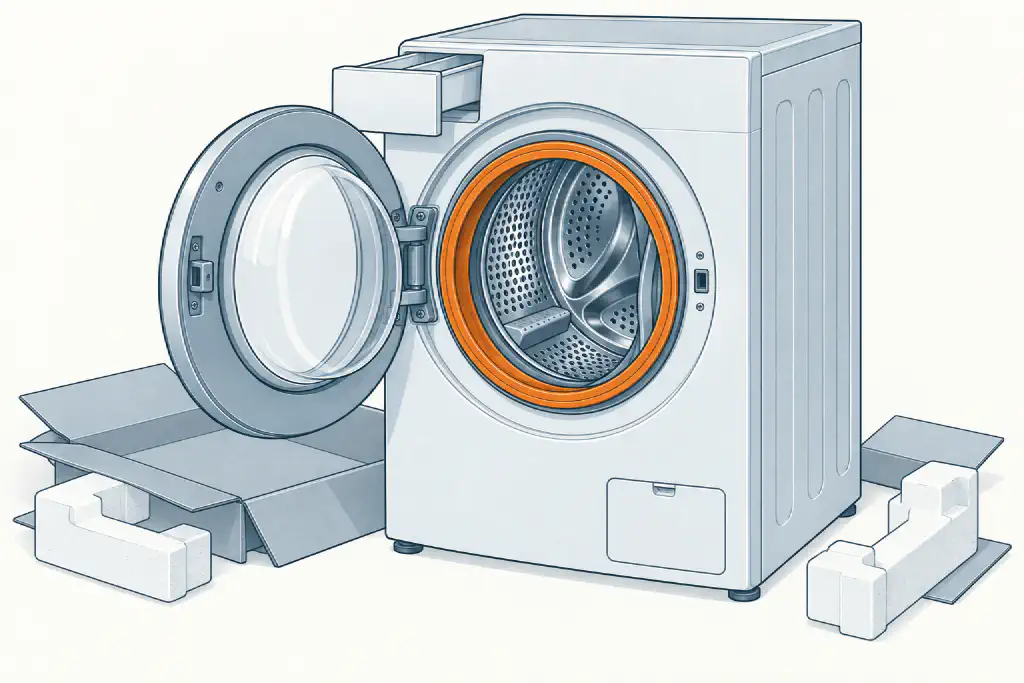
A new machine that already smells rubbery, plasticky or hot is a worrying start. Each maker’s page in the table below covers either a new-machine smell or an early burning smell, and gives its own window for it. Where to go next depends on what you smell or hear:
- Smoke, a hot plug, or a burning smell past Samsung’s or LG’s window: when to stop.
- A sewage or drain smell, or banging on the first spin: check the installation.
- A musty or damp smell: musty smell instead?
Is it normal for a new washing machine to smell?
Yes, for the smells these three makers describe, within each one’s window. For any other smell or make, check your manual or ask the maker.
| Maker (what the page covers) | Cause, in the page’s words | How long, in the page’s words |
|---|---|---|
| Bosch (new Bosch machines) | a “new smell that can’t escape when the machine is packaged up” | “These smells evaporate during the first few washes” |
| LG (its front-load washers) | “the heating of new motor coils and the insulation material around the motor” | “Under normal operation the odors should stop after 10 or 20 full cycles” |
| Samsung (its washers) | “The insulating coating on the coils in the washer’s motor may produce a burning or unusual smell” | “the first couple of cycles. After that, the odor will go away.” |
A burning smell that lasts past Samsung’s or LG’s window belongs in when to stop. A rubbery or plastic smell that hangs on is a different case: keep washing and airing as below, and if it doesn’t fade, ask the retailer or the maker.
How to get rid of the new washing machine smell
Before the first load
Some makers’ pages ask for a first run before any laundry. It isn’t a smell fix, but it comes first.
Samsung’s India first-use page asks for a complete cycle without clothes, with “a little detergent”, at 104°F (40°C). Its stated reason: this “will remove any water from the manufacturer’s test run remaining in the machine”.
Don’t be alarmed by water in a new drum. LG says water is run through its washing machines for a factory inspection, and that a small amount left in a newly purchased one “is normal”. The steps differ by maker and model, so follow your own manual.
Washing and airing
The smell mostly goes with use. Bosch’s new-machine page puts it this way: “The perception of the unpleasant smell gets less and less with every wash.” Its one piece of advice is to “Let the drum air additionally to help this process.”
Airing is a habit worth keeping. As general care for its washers, Whirlpool’s odor page says to “always leave the washer lid or door open between uses to help dry out the washer”. Start in the first week: how far to open the door, and for how long.
The first-run step above doesn’t ask for vinegar, bleach or a washer cleaner. Hold off on cleaning products until you know the smell is more than the machine being new.
Burning smell on a new washing machine: when to stop
Smoke, flames, or a hot or burning smell at the plug or outlet is not a wait-and-see smell. Go straight to what to do if there’s smoke or a hot plug.
On Samsung washers and LG front-loaders, a burning smell from the motor can be normal early on, but only for so long. On Samsung’s US support page, a burning smell “after the first two cycles” means it’s time to request service. LG’s page for its front-load washers says that if the electrical or burning-rubber smell “persists”, owners should schedule a repair. If your maker gives no window for a burning smell, treat one that doesn’t fade as a reason to stop and contact the maker or retailer.
When that happens, stop the cycle and unplug the machine at the wall, if the plug is safe to reach. With it unplugged and cool, LG gives one check for its front-load washers. Debris or small rubber items, such as toys, caught in the door gasket (the rubber seal), filter or wash tub can be heated by the machine, and LG says to wipe them away.
Then contact the maker, or the retailer while the machine is new. Staffordshire Fire and Rescue Service gives the same rule for any product: “If you are concerned about the safety of a product stop using it.”
How it’s plugged in matters too: Samsung’s UAE support page tells owners to make sure the machine is “plugged directly into a wall outlet” and to avoid “extension cords or multi-plug adapters”.
Check the installation: drain hose, level and transit bolts
If a new machine smells like sulfur or sewage, start with the drain hose. Samsung ties that smell directly to how the hose was fitted: its US support page says it means “the drain hose is inserted too far down the drain or standpipe”, with drained water “siphoning back into the washer”. Samsung’s fix is to reinsert the hose “no more than eight inches” (about 20 cm) into the pipe, and its prevention advice on the same page says no further than 6 inches (about 15 cm). Six inches meets both of Samsung’s figures. Other makers set their own limits, listed in the hose-depth table.
A machine that isn’t level is a slower problem. Samsung says water, detergent and softener then don’t drain properly, “leaving residue which over time causes odors”, and that the washer should be leveled at installation. Bosch’s UK installation page says to check it with a level and “raise or lower the feet as necessary”.
Banging on the first spin? Transit bolts
Banging isn’t a smell, but it’s the other installation check for week one. Bosch’s Canadian FAQ says its washers have 4 transportation bolts that “hold the washer drum in place during transport”, and that without removing them “you’ll hear loud banging as the washer drum operates”. On Beko’s UK support page, the bolts “need to be removed when the appliance is being installed”, and failing to remove them “will void the warranty”.
If you hear banging on the first spin, stop the cycle and follow your manual’s steps for removing the bolts.
Musty smell instead?
If the smell is musty or damp rather than rubbery, burning or sewage-like, first check the hose depth and whether the machine is level (both covered above). If those are fine, treat it as the ordinary musty build-up any washer can get, however new. That smell often lives where a wash doesn’t reach. On a front-loader, start at the checklist of places a musty smell hides; that page links a top-loader version too. Keep airing the drum between washes.